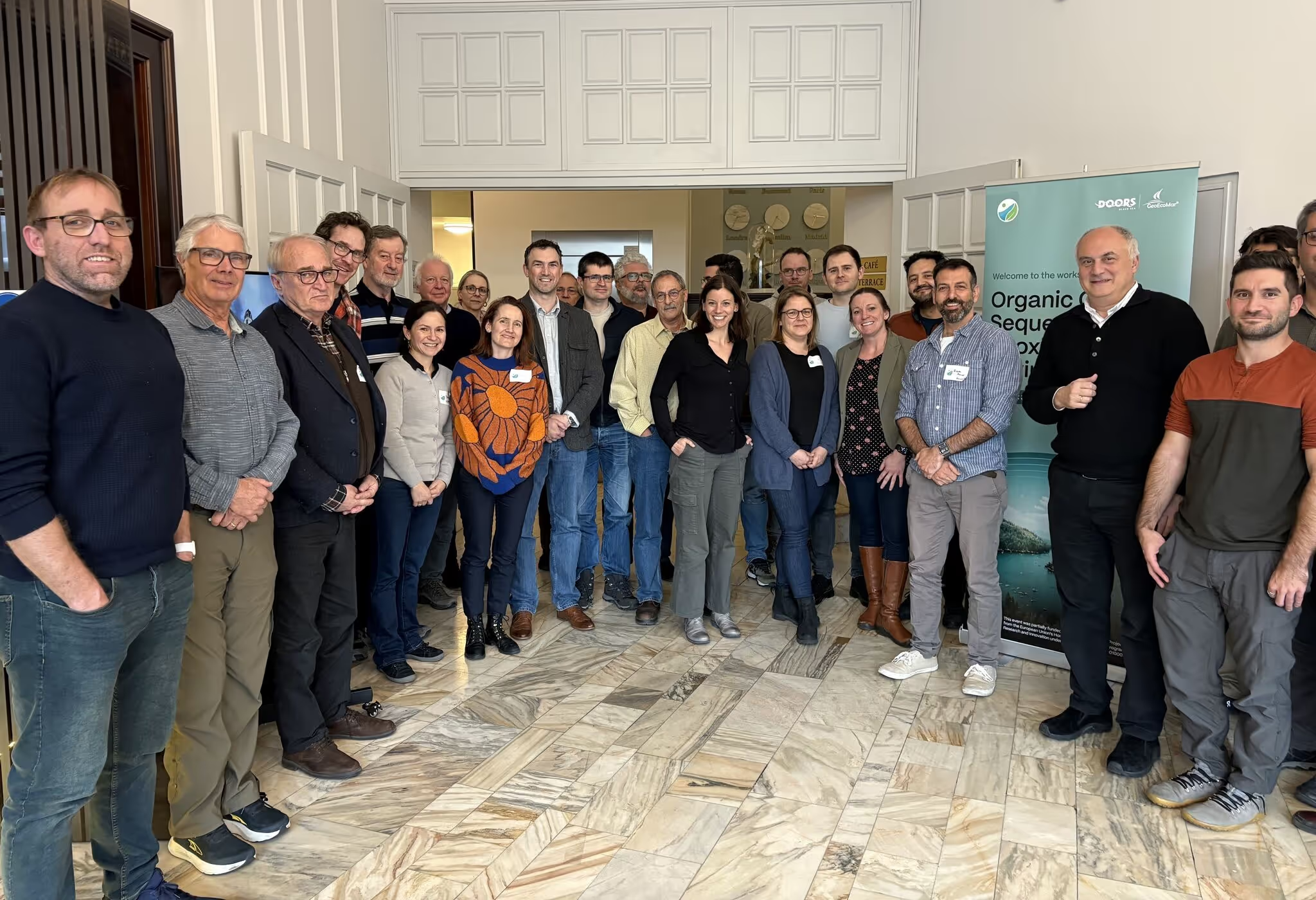
48 hours, 35 brilliant scientists, 8 discussions, 7 presentations and 1 shared goal:
Making Marine Anoxic Carbon Storage (MACS) a reality.
Carrying the momentum of the workshop with us, we feel a focused sense of purpose and a strengthened backbone supporting us forward. MACS is a simple idea with huge potential — let nature capture CO2 with plants, and geologically store the surplus plant carbon in oxygen-free marine environments. This is the way. It’s how nature does carbon sequestration, but with science and technology to help it scale safely. Going into the workshop, we knew scientific questions would be raised, but what we didn’t expect was the incredible conviction in the need to scale up field trials and the will to collaborate on fascinating research projects.
The Key Research Areas Driving Collaboration
Scientists thrive on tough questions. Some of the ones that really drove forward creativity and project design include:
- How can the impact of slow biomass breakdown on sulfide & methane be forecasted to relevant real life scales?
- What’s the right combination of tools (AUVs, sensors, cruises) to cost-efficiently monitor and compose a real-time, spatial, digital image of a multi-km2 storage site?
- How can we secure the support of local communities, regulators, and international policymakers?
One thing is clear: lab studies alone won’t cut it. Making serious progress requires well-monitored, multi-disciplinary field trials at 1,000-ton scale. We feel this is a call to environmental agencies around the world, as well as the London Protocol, OSPAR, the Black Sea Commission and others. The risk inflicted upon the ocean by inaction is far greater than the risk of storing natural biomass in oxygen-free marine environments.
Next Steps: Turning Ideas Into Action
The workshop didn’t just spark conversations—it set things in motion. Already in the works are:
- A MACS R&D Roadmap to outline the next research steps.
- A Perspectives Paper to highlight the urgency and need for progress on MACS.
- A consortium of 25 institutions across 14 countries ready to collaborate
And meanwhile, you can read the official executive summary here.
A Huge Thank You
None of this would have happened without the dedication of so many people. Special thanks to Prof. Morgan Reed Raven, Prof. Adrian Stanica, Prof. Dror Angel, the GeoEcoMar team, and the Rewind team for making this event possible. The workshop was an Ocean Decade Activity, co-funded by the H2020 DOORS Black Sea Project and the Grantham Foundation, whose support was instrumental in bringing the MACS group together.
We left Bucharest with more clarity, more partners, and a stronger conviction that MACS has a real role to play in global carbon removal. Reach out to us to get involved, and sign up to our newsletter to stay updated as this work continues to unfold.



.png)